Dr. Amna owns a laboratory in Dubai Healthcare City. She suffered a loss of AED 9,000 worth of vaccines last week due to her receiving delivery of the shipment at a high temperature. Desperate and confused, Dr. Amna contacted her old friend Faisal, who runs a cold chain transportation company. The following dialogue represents the thoughts that everyone in similar positions must have.
“My Vaccines Arrived Warm. What Went Wrong?”
Dr. Amna: Faisal, I have got a huge issue. We received a delivery of vaccines from our supplier last week. They were warm. I had to discard the entire lot. My tech says our cold chain was broken during the process from supplier to us. How do these things happen?
Faisal: Believe me, Amna, this happens far more often than you think. Almost all medical supplies like vaccines, diagnostic samples, reagents, and biologics have a very narrow window in terms of temperature. Vaccines usually require 2 to 8 degrees Celsius. Several diagnostic samples have a temperature range of 2 to 8 degrees Celsius; a few are at –20 degree Celsius, while only RNA tests at –70 degrees Celsius. Once this window gets broken, the supply is spoiled.
Dr. Amna: And why not use refrigerated vehicles? It should be straightforward.
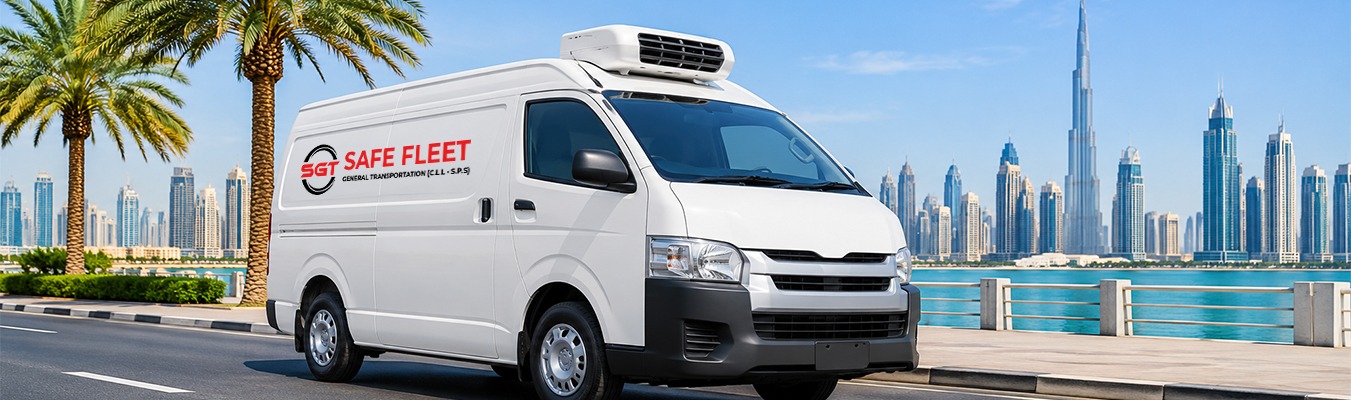
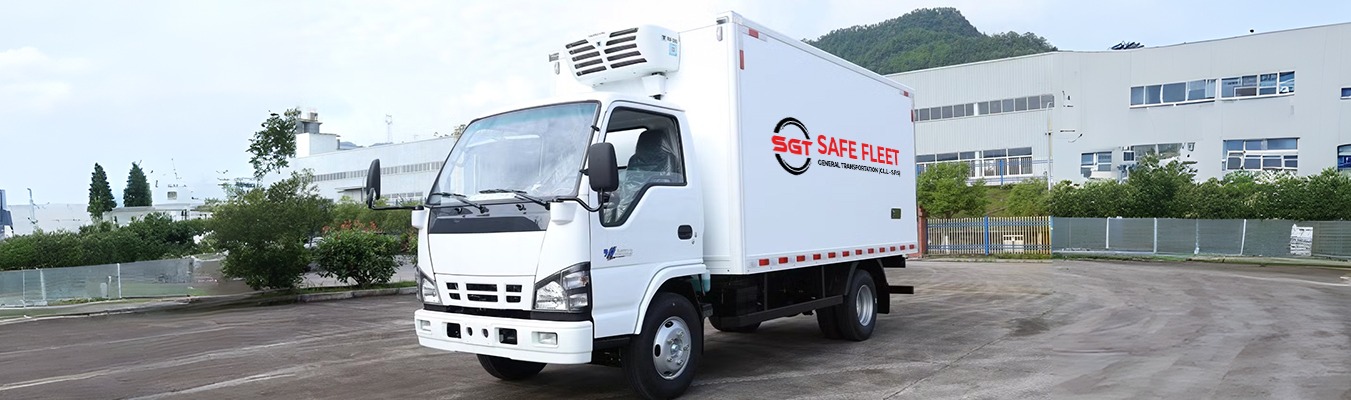
Faisal: They do. But cold transport for medical laboratories is quite different from transporting ice cream. It has regulations, documentation, and audits associated with it. A proper cold chain vehicle for medical purposes would have a calibrated refrigeration system, temperature logger recording the temperature every minute, sealed insulated doors, and specially trained drivers aware that they are transporting medication, not food. If any of the four is missing, you have an “opening,” but it is invisible until you open a vial and find it useless.
What a Real Medical Cold Chain Looks Like
Dr. Amna: But then, how do I, as an owner of a clinic, know what to verify when my supplier or my courier says, “Do not worry, it is cold”?
Faisal: Check for four things:
First, what temperature range was maintained throughout, and can you get the data logger printout?
Second, did the truck cool itself down before loading, or did the goods stay in a warm container while the machine caught up?
Third, were vaccines and samples isolated from non-medical products, since using a chiller truck to ship frozen chicken together with flu vaccines is a recipe for a compliance nightmare.
Fourth, who trains the driver, and is the vehicle validated to WHO PQS or EU GDP standards?
Dr. Amna: What about if I have to ship samples from my practice to another laboratory in Abu Dhabi?
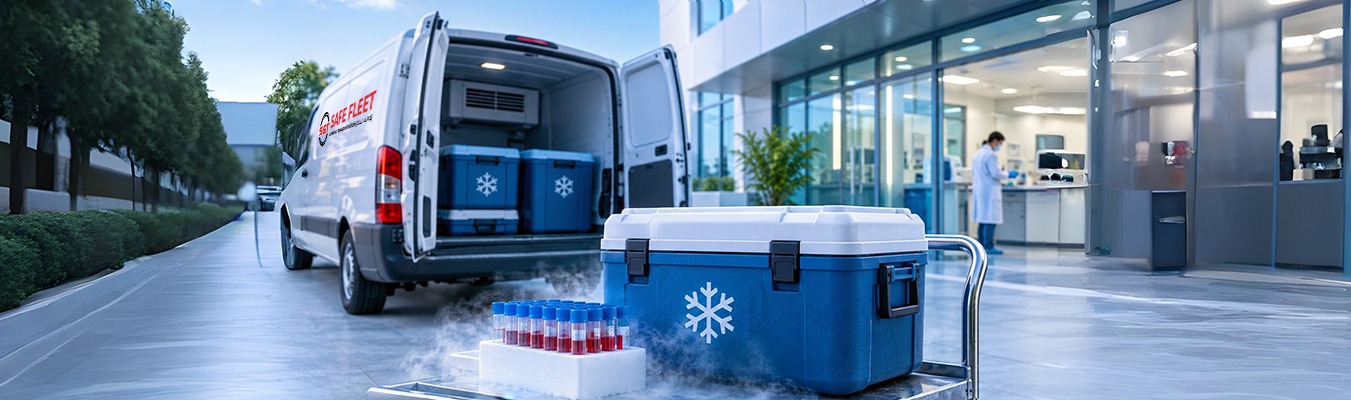
Faisal: Same rules apply. Choose a certified medical courier with 2-8 °C active cooling box for standard samples, or a dry-shipper for frozen samples. Absolutely no ordinary taxi or general-purpose delivery service is ever an option. The sample is temperature-sensitive alright, but more importantly, it is an actual result for the actual patient. Just one hour at the wrong temperature is enough to make your whole test a waste of time.
Why Most Clinics Underestimate the Risk
Dr. Amna: I thought my vendor was taking care of everything. I didn’t even ask for a temperature log.
Faisal: And that is where all clinics go wrong. Your supplier might have all the documentation to comply, but the last mile delivery that they use is a generic logistics service without any specific compliance processes. Cold chain is only as good as its weakest link, and the weakest link will always be the final thirty minutes when a perfectly fine truck could be spoiled by a 15-minute logging process in the clinic reception.
Dr. Amna: And how does this affect me?
Faisal: In three ways.
One, ask for a temperature log with every cold chain delivery; no log – no delivery.
Two, train your reception and nursing staff to transfer the delivery inside the fridge within two minutes from delivery.
Three, when you transport your samples back, make sure that the courier service is a medical grade one with verified equipment and proper chain of custody documentation.
Follow these three points and you will lower your risk by 90%. This is not a recommendation. This is a requirement by the WHO, DHA, and MOH UAE.
Conclusion
One thing became abundantly clear to Dr. Amna once he got off the phone. Cold chain transport for medical labs and clinics is all about requiring proof, educating the staff, and working with partners who have refrigerated trucks certified for medical grade transport. The samples, vaccines, and medical supplies that need to be transported are not just some cargo. They are patient results on the move.
For medical laboratories, clinics, and hospitals in Duai and throughout the UAE that want to have an auditable cold chain from start to finish, Safe Fleet UAE provides medical-grade refrigerated transport solutions — from data logging and calibration to medically educated drivers.
Frequently Asked Questions (FAQs)
1. At what temperature should vaccines be shipped in Dubai?
Vaccines generally need to be kept at 2-8°C during transit according to WHO and Ministry of Health (UAE) standards. There are some vaccines like mRNA vaccines and varicella vaccines that need to be shipped at -15°C to -25°C or lower temperature. Safe Fleet Dubai offers calibrated temperature-controlled vehicles with data logger that maintain the specified temperature range from start to finish.
2. How are medical samples transported safely in the UAE?
Medical samples should be transported using specialized, puncture-resistant containers that maintain the temperature range at 2-8°C or -70°C depending upon the type of sample. Chain of custody documentation, medically certified courier service, calibration certificate, etc., are compulsory requirements. Routine delivery services and taxis are never to be used for transporting any diagnostic samples.
3. What is cold chain logistics in medical transportation?
The cold chain refers to the series of storage and transportation operations carried out in a manner that ensures that vaccines, samples, and other biological products remain within the acceptable temperature range from the time of production to delivery. The slightest breach – such as an exposure to temperatures outside the prescribed range for just 20 minutes – may lead to destruction of the efficacy of a vaccine or invalidation of a diagnostic test.
4. What are the compliance standards relevant to cold chain transportation in clinics in the UAE?
In the United Arab Emirates, cold chain transportation of medical goods is regulated by Dubai Health Authority (DHA), UAE Ministry of Health and Prevention, WHO Pharmaceutical Quality Assurance System (PQS), and European Union Good Distribution Practices for medicinal products.
5. How can I get the best medical cold chain transportation service in Dubai?
The company should have calibrated trucks with the capability of temperature monitoring and data logging reports in every shipment, well-trained drivers who can carry pharmaceutical products, segregation of pharmaceutical and non-pharmaceutical cargo, proper compliance certificates, and a chain of custody. Safe Fleet Dubai offers all these services in Dubai and the UAE region.