
A Day in the Cold Chain
In Jebel Ali, it’s 4 a.m. and the port is humming with activity. Ahmed, a seasoned logistics planner, observes as the world’s largest reefer container is lowered onto the dock. It’s filled with thousands of kilos of frozen fish and shellfish, ice-cream, and pre-cooked, vacuum-packaged foods, all of which will go directly onto the shelves of supermarkets in Dubai, Abu Dhabi and Sharjah.
For Ahmed, it isn’t only about the cargo. It’s a promise. A promise that when a mother in Al Ain is buying frozen chicken nuggets, ready for her children to have, that they will be as fresh and ready to eat as when they first went in the box. And a freezer truck is where the promise is kept.
The Journey Begins: Jebel Ali is the Gateway for the UAE’s Freezer Aisle
Jebel Ali Port is the largest port in the Middle East. It’s also the center of the UAE’s frozen food business. Jebel Ali has high-tech cold storage sections with capacity for over 60,000 pallets. The temperature of these is kept between 25C to +5C. The port acts as the main gateway to the UAE for frozen imports.
The truth is, most people don’t understand is that the most dangerous time for any frozen food is not during the weeks it drifts across the Pacific, but during the half-hour it spends moving between port to truck and truck to shop.
The Science Behind the Cold Chain
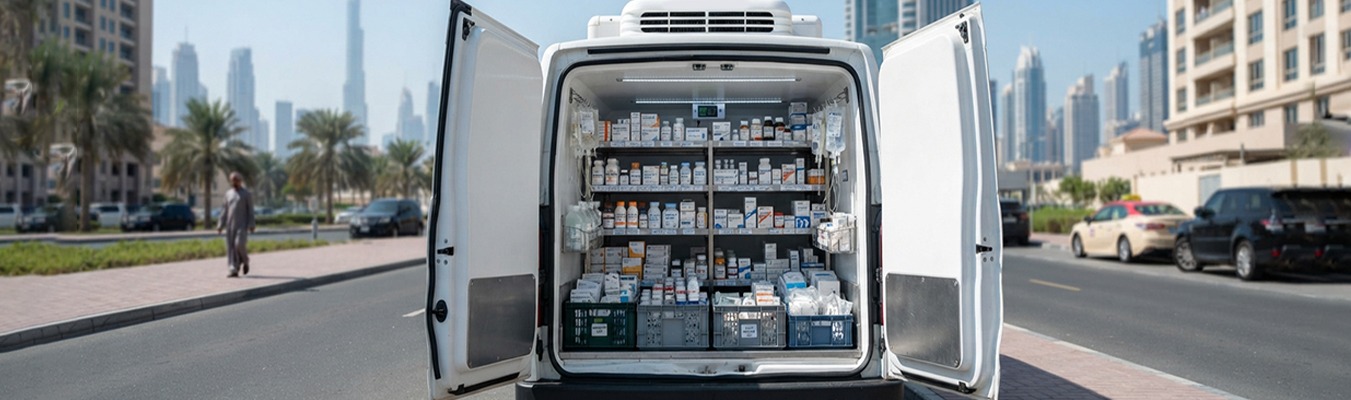
Today, the freezer trucks are not simply refrigerated cargo transport, but state of art mobile cold rooms having:
- Hospital with two-year-old state-of-the-art cooling technology to hold the temperature at -18°C constant.
- Real time Internet of Things monitoring temperature, humidity, and geo-location.
- State-of-the-art GPS enabled fleet management system to identify the fastest most efficient way to routes.
- The ability to pre-cool up to the loading point and maintain a predetermined temperature.
In UAE, the regulations enforced by Dubai Municipality stipulate that all refrigerated vehicles undergo an annual inspection at the approved testing centers. Vehicles are not allowed to carry anything but food, and because of the age of a vehicle, separate Ha11 and non-Ha1a vehicles may have to be used.
Why the Last Mile Matters Most
Imagine that the journey takes 3 weeks at sea, and a shipment of top quality frozen fruit is delivered to Jebel Ali, in a reefer container, which has held a stable 18 C. The quality of the fruit has been held for the duration of the trip so far.
It’s now or never. Those berries have 50 supermarkets to be delivered to in the Emirates within 48 hours. With every stop on the route there’s another chance of the temperature rising. More traffic jams. Another missed appointment and they could be lost.
This is the point at which professional freezer truck services can shine. By providing real time temperature monitoring, improvement of transportation routes, and experienced drivers whose job is to maintain the integrity of the food, the cold chain stays alive from port to shelf.
What UAE Businesses Need to Know
For businesses operating in the UAE be a restaurant, a super-market or a food distribution cold chain knowledge is not optional but a matter of business life!
Food safety compliance is a given. The Dubai Food Code and the UAE HACCP standards demand full traceability. Temperatures must be recorded. Health certificates are needed with imports. Any disruption in the cold chain will lead to recalls, fines, or worse ill customers.
Speed is money saved. The quicker frozen cargo goes from port to market the less energy goes into keeping it cold and the fresher it remains for the consumer and that applies to producers as well as consumers.
Not all freezer trucks are equal. When choosing a refrigerated transport partner, look for:
- Dubai Municipality enables and certifies
- Ability to observe temperature in real time.
- Developments GPS monitoring, and route improvement
- Set up under the requirements for Halal logistics.
- Around the clock administration for all urgent deliveries.
Frequently Asked Questions
Q1: How cold should freezer trucks be for frozen foods (if it applies)?
As laws of UAEs, all freezer trucks should maintain -18 o C as temperature at all times for frozen foods is acceptable for all transported frozen foods. This is standardized as the general requirement and operator is well monitored by continuous IoT monitoring.
Q2: How long can frozen food be kept in transit when it’s hot?
When transport takes place in a correctly functioning freezer-truck, with the food on-board being kept cooled continuously, then it will stay frozen indefinitely. Loading/unloading is most important, and can be restricted to less than 15 minutes (often less), using vehicles cooled in advance so that the product does not need to be cooled during the process.
Q3: Is it important to find a service provider for my freezer truck (UAE) with the right qualifications?
Find food suppliers using a Dubai Municipality issued transport license, HACCP certification, ISO 22000 or FSSC 22000 accreditation, and one that has experience handling frozen food logistics. These indicate compliance with UAE local food safety laws; as well as the strict standards required of frozen food distributions.
Q4. In what way do GPS-tracked frozen food deliveries ensure more accurate arrival time?
A GPS enabled freezer truck optimizes your route on the spot decreasing transportation time and costs while providing you the ability to instantly reprioritize with concern to delays or malfunction one of your trucks. Should an issue occur, backup can be sent just as fast as the other truck.
Q5. What’s the distinction between chiller trucks and freezer trucks?
Chiller trucks, operating at 0°C to +5°C, are used to transport fresh produce, dairy, and chilled [refrigerated] drinks. Freezer trucks, operating at -18°C or below, are required for frozen meat seafood ice cream, and prepared foods. Transportation of goods in inappropriate trucks can bring spoilage, breaches of food safety legal requirements, and economic losses.
Your Cold Chain Partner in the UAE
Frozen food from Jebel Ali Port to supermarkets, restaurant, and catering establishments throughout Dubai, Abu Dhabi and Sharjah demands effective temperature regulations and food-safety norms.
Safe Fleet transports frozen and chilled goods and products for example frozen pizza, ice cream and other frozen foods in temperature-controlled conditions. Safe Fleet delivers frozen and chilled goods and products, whether coming in through Jebel Ali or processing their distributed throughout the Emirates, using the appropriate transport solutions to maintain a safe controlled grade having the right temperature.