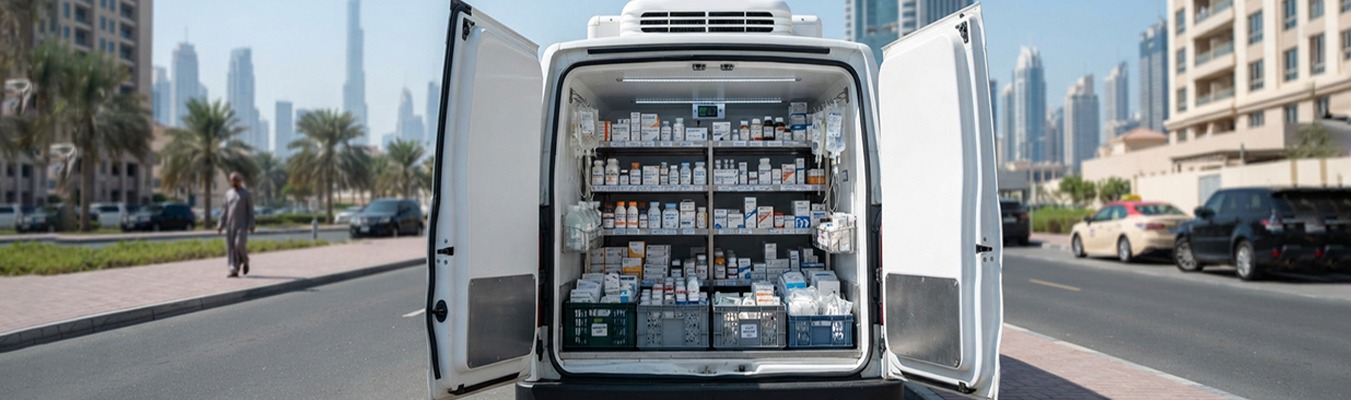
A batch of insulin leaves the warehouse at 8 a.m., perfectly chilled. It sits in traffic near Al Garhoud for forty minutes. The driver has the AC on, sure, but the cargo box? Nobody’s watching it.
By the time it reaches the pharmacy, it’s technically “delivered.” Whether it’s still safe to use is a different question entirely.
That’s the hidden risk sitting inside pharmaceutical logistics in the UAE. And in a climate like this one, it isn’t rare. It’s daily.
Dubai’s Heat Doesn’t Care About Your Delivery Schedule
Summer temperatures in Dubai regularly climb past 45°C, and road surfaces run even hotter. The inside of a parked, un-refrigerated van can hit dangerous levels in minutes, not hours.
Most medicines aren’t built to survive that. Vaccines, insulin, biologics, certain antibiotics… they all live within a tight range, usually 2°C to 8°C. Step outside that range, even briefly, and the product can lose potency. Sometimes with no visible sign at all.
That’s the part that should worry you. A degraded medicine doesn’t look different. It just doesn’t work the way it should, and nobody finds out until it’s too late.
What “Cold Chain” Actually Means
Cold chain logistics is simply the practice of keeping a product within its required temperature range, from the moment it leaves the manufacturer to the moment it reaches the patient. No gaps. No shortcuts. No “it was only for twenty minutes.”
In pharma, this isn’t a bonus. It’s the whole job. One broken link, one uncooled van, one delayed handover in the midday heat, and the entire chain is compromised.
The Real Cost of Getting This Wrong
When temperature control fails, the damage goes well beyond a spoiled shipment:
- Patient safety: Weakened medication means weaker treatment, and in some cases, real harm.
- Financial loss: Pharmaceuticals aren’t cheap. A failed cold chain can mean writing off an entire batch.
- Compliance trouble: UAE health authorities take pharmaceutical handling seriously, and so should you. Non-compliance brings fines, audits, and damaged licenses.
- Reputation: Pharmacies, hospitals and distributors remember who kept their promise and who didn’t.
This is why temperature-controlled transport isn’t a logistics detail. It’s a condition for doing business in this sector at all.
What Proper Pharmaceutical Transport Looks Like
Good cold chain delivery in the UAE has a few Absolute Requirements:
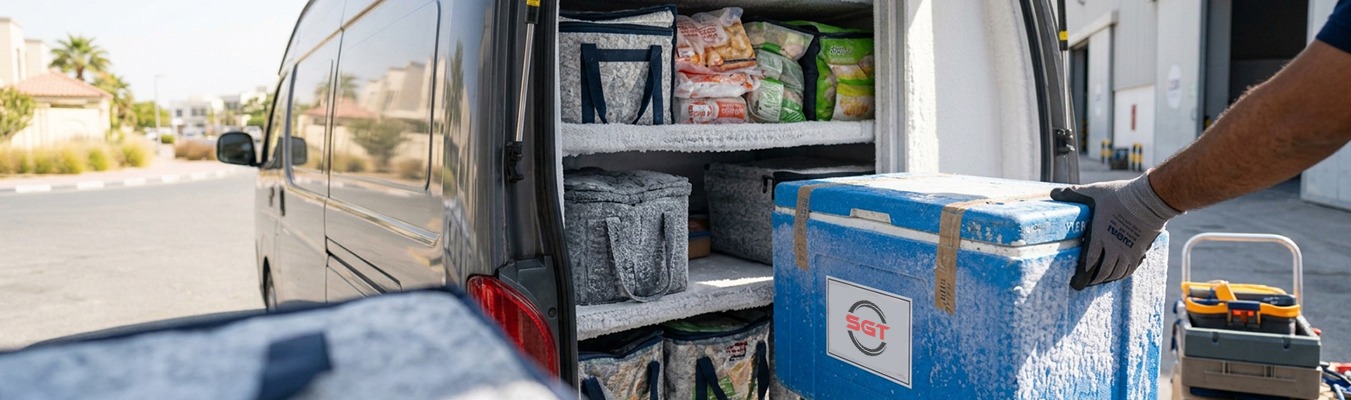
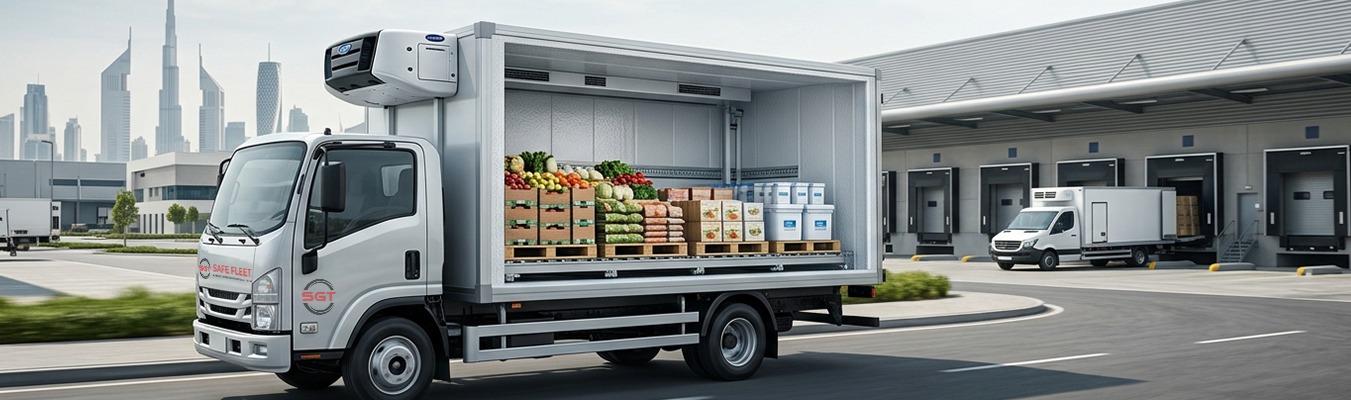
- Purpose-built refrigerated vehicles: Not a van with the AC turned up. True pharma transport uses insulated, temperature-regulated units designed to hold a range, not just cool the air.
- Continuous monitoring: Temperature loggers and real-time tracking, so you know the cargo stayed in range the entire route, not just at pickup and drop-off.
- Trained handlers: The person loading, driving and unloading needs to understand why speed at the loading dock matters just as much as speed on the road.
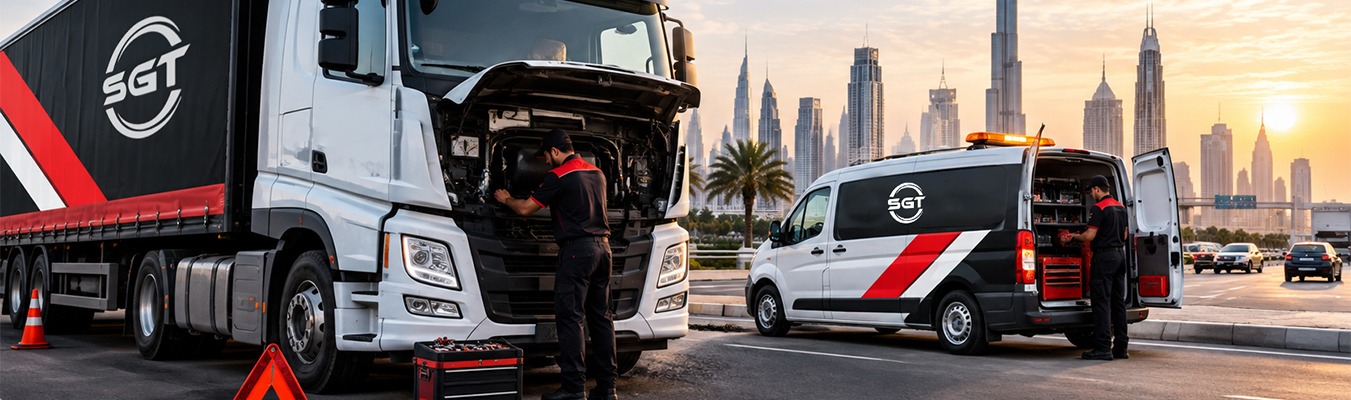
- Backup capacity: If a refrigerated vehicle breaks down mid-route, there needs to be another one ready to take over immediately. A pharma shipment cannot simply wait for a tow truck.
That last point is where most businesses get exposed. Everyone plans for the delivery going right. Few plan for what happens when the vehicle doesn’t cooperate.
Ordinary Refrigeration Transportation vs. Specialized Pharmaceutical Transportation
- Ordinary Refrigerated Transport vs. Specialized Pharmaceutical Transport: Primarily focuses on keeping goods cold versus focusing on maintaining the specific temperature conditions required by pharmaceutical products.
- Temperature Management: The main goal is to prevent goods from becoming excessively warm versus maintaining a precise and consistent temperature throughout the entire journey.
- Vehicle Requirements: A refrigerated truck may be sufficient for general temperature-sensitive goods versus requiring specialized temperature-controlled vehicles designed for pharmaceutical transportation.
- Monitoring: Temperature monitoring may be limited depending on the type of goods being transported versus using monitoring instruments and continuous temperature recording to track conditions throughout transit.
- Loading Procedures: Standard loading and unloading procedures may be adequate versus requiring controlled loading and off-loading procedures to minimize temperature fluctuations.
- Expertise: Does not necessarily require specialized pharmaceutical handling expertise versus requiring trained personnel who understand pharmaceutical handling and cold-chain requirements.
- Core Function: Keeps the goods cold versus maintaining the required conditions of the pharmaceutical products.
| Ordinary Refrigerated Transport | Specialized Pharmaceutical Transport |
|---|---|
| Primarily focuses on keeping goods cold[cite: 1] | Focuses on maintaining the specific temperature conditions required by pharmaceutical products[cite: 1] |
| The main goal is to prevent goods from becoming excessively warm[cite: 1] | The goal is to maintain a precise and consistent temperature throughout the entire journey[cite: 1] |
| A refrigerated truck may be sufficient for general temperature-sensitive goods[cite: 1] | Requires specialized temperature-controlled vehicles designed for pharmaceutical transportation[cite: 1] |
| Temperature monitoring may be limited depending on the type of goods being transported[cite: 1] | Uses monitoring instruments and continuous temperature recording to track conditions throughout transit[cite: 1] |
| Standard loading and unloading procedures may be adequate[cite: 1] | Requires controlled loading and off-loading procedures to minimize temperature fluctuations[cite: 1] |
| Does not necessarily require specialized pharmaceutical handling expertise[cite: 1] | Requires trained personnel who understand pharmaceutical handling and cold-chain requirements[cite: 1] |
| Keeps the goods cold[cite: 1] | Maintains the required conditions of the pharmaceutical products[cite: 1] |
Why This Matters More in the UAE Than Almost Anywhere Else
The UAE’s pharmaceutical and healthcare sector is growing fast. More hospitals, more pharmacies, more clinical trials, more imported medication arriving by air and needing to move across the city immediately.
All of that happens against a backdrop of extreme heat, dense traffic, and a public that expects speed. It’s a Challenging mix, and it leaves very little room for error.
Businesses that treat temperature control as optional, or as something to figure out later, tend to figure it out the expensive way. Usually after a client complaint, a failed audit, or a costly write-off.
Choosing a Transport Partner You Can Trust With This
If you’re moving pharmaceutical products in Dubai, your transport partner needs to offer more
than “we have refrigerated trucks.” Ask them:
- Can you show me the temperature log for this exact route?
- What happens if a vehicle breaks down mid-delivery?
- Are your drivers trained specifically for pharma handling?
- Can you scale up for sudden demand, like a vaccine rollout or a seasonal spike?
If the answer to any of these is vague, keep looking. In this industry, unclear response eventually become real problems.
The Bottom Line
Temperature-controlled transport isn’t about convenience. It’s about whether the medicine in that box still does what it’s supposed to do when it reaches the person who needs it.
In a city as fast-moving and as hot as Dubai, that protection has to be built in from the first mile to the last. No gaps, no guessing, no “it was only a few minutes.”
That’s exactly the kind of reliability Safe Fleet is built around… temperature-controlled vehicles, trained handling, and backup support ready the moment something goes wrong. Because when
it comes to pharmaceuticals, “close enough” was never good enough.
PS: If you’re not 100% sure your current cold chain holds up under a Dubai afternoon, that’s worth checking before it becomes a problem, not after.
FAQs
What temperature range do most pharmaceuticals need during transport?
Many medicines, including vaccines and insulin, need to stay between 2°C and 8°C. Some products require deeper freezing. Always check the manufacturer’s specific requirement, since it varies by product.
How is temperature monitored during delivery?
Reliable providers use temperature data loggers and real-time tracking inside the vehicle, giving you a verifiable record for the entire route, not just a reading at pickup.
What happens if a refrigerated truck breaks down mid-delivery?
A proper cold chain partner has backup refrigerated vehicles on standby, so the cargo can be transferred quickly instead of sitting in a stalled truck losing its temperature control.
Is temperature-controlled transport legally required in the UAE?
UAE health authorities set strict handling standards for pharmaceutical products, and non-compliance can bring fines, audits or licence issues. Confirm current requirements with your regulatory body.
Does this only apply to vaccines and insulin?
No. Many biologics, certain antibiotics, eye drops, and some specialty medications are also temperature-sensitive. If in doubt, assume a product needs cold chain handling until confirmed otherwise.